SEO Ranking Reports
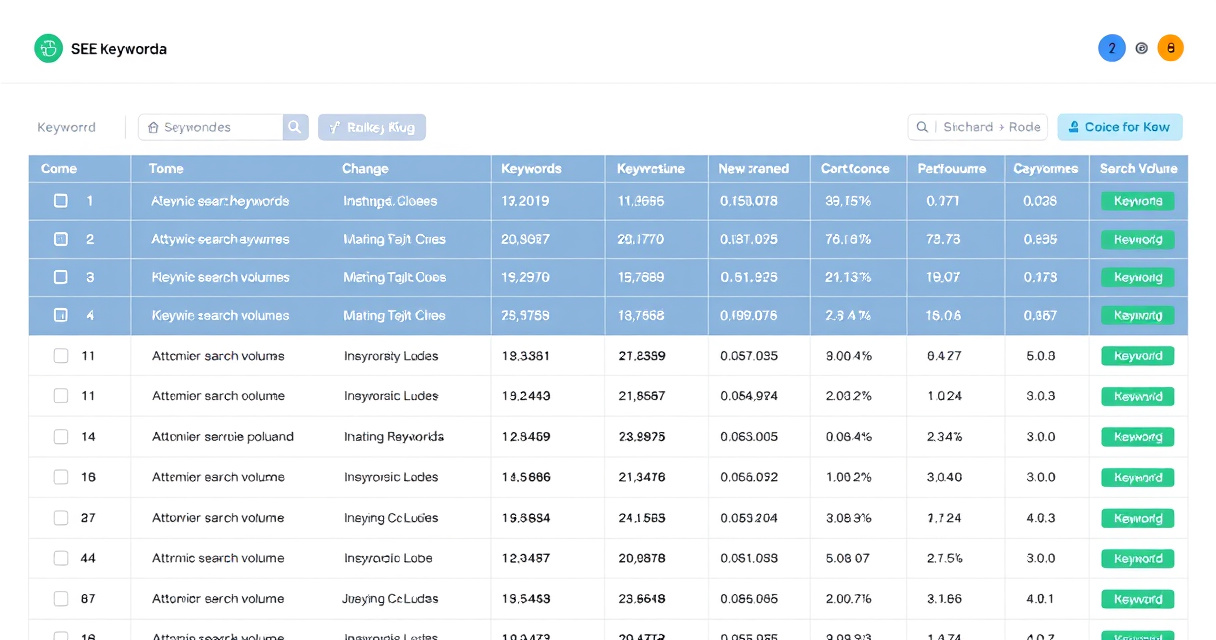
An SEO ranking report is a tool-generated summary of how a website's target keywords rank in search results over time, usually combined with visibility, clicks, and traffic context.
Key takeaways
- An SEO ranking report tracks keyword positions over time, not just a single snapshot.
- Combine rankings with traffic, clicks, and conversions for meaningful insights.
- Avoid reporting positions without context – include CTR, seasonality, and competitor changes.
- Free tools like Google Search Console cover the basics; paid tools add automation and depth.
- Use ranking reports as one KPI among many, not the sole measure of SEO success.
SEO ranking reports help you see whether your optimization work is improving search visibility and explain performance changes to clients or stakeholders.
What Is an SEO Ranking Report Used For?
- Track keyword positions over time to see climbs, drops, and trends
- Compare current rankings to previous periods (weekly, monthly)
- Connect ranking movement to organic traffic, impressions, clicks, and CTR
- Identify SERP features (featured snippets, local packs) that affect visibility
- Share performance updates with clients or team members
- Spot site-specific vs. broader SERP changes by adding competitor comparisons
How to Build Your First SEO Ranking Report
- Choose your data source – Start with Google Search Console (free) or a paid tool like Semrush or Ahrefs.
- Select target keywords – Focus on high-priority keywords that drive traffic or conversions. Avoid including every low-priority term.
- Set a date range – Compare the current period (e.g., last 30 days) to the previous period to see changes.
- Add context metrics – Include impressions, clicks, CTR, and average position. Connect to Google Analytics 4 for traffic and conversions.
- Visualize trends – Use line charts for position changes over time. Highlight significant movements.
- Review and share – Summarize key wins, drops, and possible causes (seasonality, algorithm updates, content changes).
When Not to Start Here
- You have no keyword strategy yet – Start with keyword research to identify which terms matter.
- Your site has no traffic – Ranking reports are most useful when there is data to track. Consider an SEO audit first.
- You only care about rankings without context – Avoid reporting positions alone. Always pair with traffic, CTR, or conversions.
- You need a full technical health check – Ranking reports don't cover site speed, crawl errors, or backlinks. Use an SEO audit instead.
Alternatives to SEO Ranking Reports
| Tool / Approach | Best For |
|---|---|
| Google Search Console | Free, basic ranking and performance data |
| Google Analytics 4 | Connecting rankings to user behavior and conversions |
| Semrush | Paid, advanced rank tracking with competitor analysis |
| Ahrefs | Paid, rank tracking plus backlink and content analysis |
| SE Ranking | Paid, automated daily tracking and white-label reports |
Next step
FAQ
What is an SEO ranking report?
An SEO ranking report is a document or dashboard that shows how a website's keywords perform in search engine results over time, typically including positions, changes, and related metrics like traffic and clicks.
How often should I generate an SEO ranking report?
Weekly or monthly is common, depending on the pace of changes. Automated daily tracking is useful for competitive keywords.
What is the difference between an SEO ranking report and an SEO audit?
A ranking report focuses on keyword positions and search visibility over time, while an SEO audit is a broader analysis of technical health, on-page issues, and backlinks.
Related topics
Sources
- Google Search Central — Best authority for how Google Search works, Search Console data, and ranking-related guidance.
- Google Search Console Help — Official documentation for performance reports, impressions, clicks, CTR, and average position.
- Google Analytics Help — Official source for connecting search performance to sessions, conversions, and engagement.
- Search Engine Journal — Widely used industry publication for SEO reporting practices and tool comparisons.
- SE Ranking — Current rank-tracking and reporting tool guidance, useful for modern workflow examples.
Reviewed by Lucía Marín, Founding editor.